Bio-based plastics for infusion bags
Frankfurt research team develops sustainable alternative to medical products made from crude oil in cooperation with bioplastics start-up BIOVOX
Advertisement


Catheters, blood bags, respiratory tubes: disposable medical products made of plastic contribute significantly to the waste load in hospitals and to high greenhouse gas emissions in the healthcare sector. This requires innovative material solutions. Bio-based plastics offer a promising alternative to petroleum-based plastics, as they have a lower carbon footprint and do not emit any additional CO₂ during incineration.
This is where a project at the Frankfurt University of Applied Sciences (Frankfurt UAS) comes in: A research team led by Prof. Dr. Diana Völz and Prof. Dr. Ilona Brändlin, together with BIOVOX GmbH from Darmstadt, represented by Dr.-Ing. Vinzenz Nienhaus, is developing a plastic made from renewable raw materials for infusion bags. The project entitled "Bio_K_Sub - Development of a bioplastic compound for medical products as a more sustainable substitution material" is being funded with around 500,000 euros as part of the Hesse innovation funding program from the LOEWE - Landes-Offensive zur Entwicklung Wissenschaftlich-ökonomischer Exzellenz (funding line 3: SME joint projects) and will run until October 2026.
High demands on bio-based plastics
According to a recent study¹, German hospitals produce an average of around 8.3 kilograms of waste per patient and hospital stay. The recycling of single-use medical products is severely restricted due to high hygiene and safety requirements, which is why most medical waste is incinerated, putting an additional burden on hospitals' carbon footprints. Bio-based plastics, together with effective recycling, minimize the CO₂ emissions of medical products. They are considered more sustainable than conventional plastics because when they are incinerated, only the CO₂ that the plants previously absorbed is released. They also offer the opportunity to do without harmful additives (such as plasticizers).
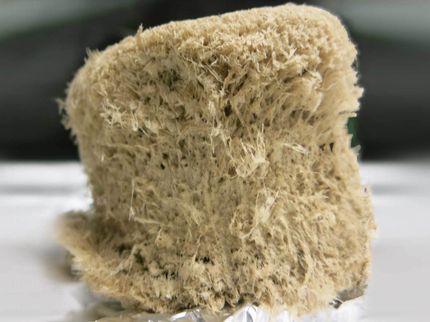
Bio-based plastics can already be used for packaging medical products, as their components are considered stable and safe in contact with the human organism. "The particular challenge for our project is to develop a plastic that, in addition to the required biostability, is also resistant to ageing and has UV resistance, for example. This requires special knowledge in the field of compounding, i.e. the addition of additives to achieve the desired properties," explains Prof. Dr. Diana Völz, Professor of Product Development, Design and CAD.
The joint partners BIOVOX and Frankfurt UAS - in particular the team from the Personalized Biomedical Engineering (PBE) research laboratory, which includes Diana Völz and molecular and cell biologist Ilona Brändlin - have interdisciplinary research expertise as well as laboratory facilities and experience in the production and assessment of the biological safety of bio-based plastics. Preliminary work already carried out by BIOVOX includes plastic compounds for other applications, such as housings for vegan rapid pregnancy tests and handles for surgical instruments.
Research into the use of biobased plastics for disposable items in the healthcare sector is complemented by the work of Maria Heckel, who is working on ecological balancing models for bioplastics as part of her doctorate.
Proof of biocompatibility
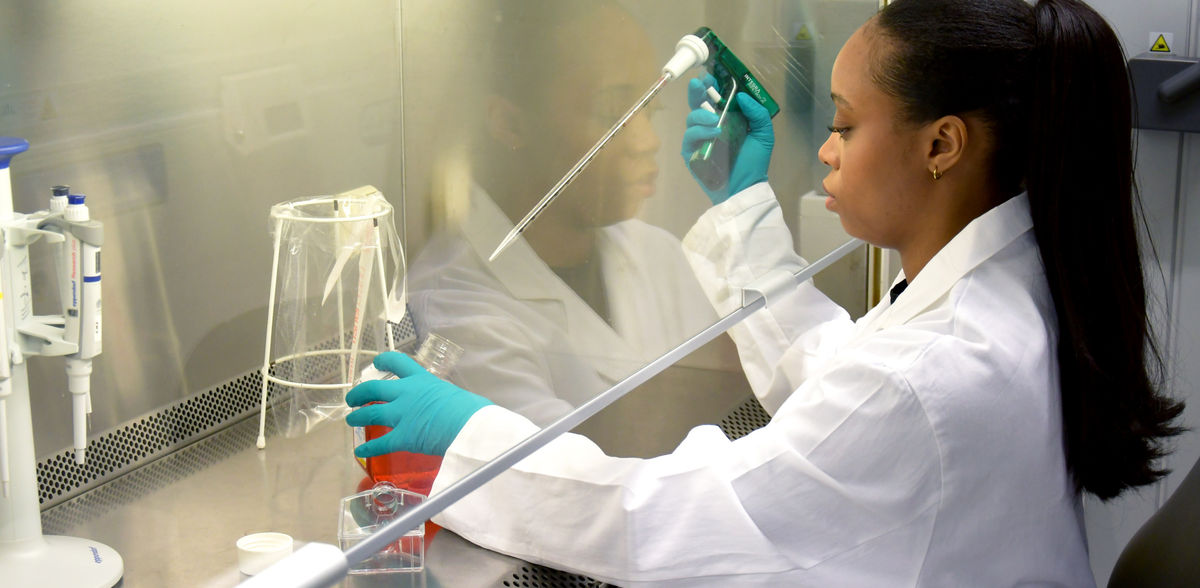
While BIOVOX develops the "recipe" for the plastic granulate based on cellulose, sugar cane or corn starch, the adapted biocompatibility tests and physical and chemical safety tests are carried out at Frankfurt UAS. "Proof of biocompatibility is essential for later market readiness, as this is an important aspect for the usability of the material," says Ilona Brändlin. The biocompatibility analyses of the bioplastics developed are carried out under her leadership using eukaryotic cell cultures in a safety laboratory in accordance with the 3R principle to avoid animal testing (Replace = avoid, Reduce = reduce, Refine = improve). The tensile tests on the plastic, which provide information on important mechanical properties such as yield stress, yield strength and tensile strength of the material, are carried out in the biomechanics laboratory.
Establishing material cycles in medicine
The research team hopes to gain further scientific insights into ensuring the ageing and water resistance of bio-based plastics, which will be confirmed by comprehensive biological tests and impact analyses. "The project therefore has considerable economic and scientific innovation potential and contributes to the establishment of material cycles and thus to achieving the climate targets set in the medical sector," summarizes Völz.
The desired material properties in terms of durability and usability of the newly developed bio-based plastic can also be used for other medical containers such as blood bags in the future.
1Benchmark studyby Pforzheim University on waste generation at German hospitals
Note: This article has been translated using a computer system without human intervention. LUMITOS offers these automatic translations to present a wider range of current news. Since this article has been translated with automatic translation, it is possible that it contains errors in vocabulary, syntax or grammar. The original article in German can be found here.

Other news from the department research and development














Most read news




More news from our other portals
















Something is happening in the life science industry ...
This is what true pioneering spirit looks like: Plenty of innovative start-ups are bringing fresh ideas, lifeblood and entrepreneurial spirit to change tomorrow's world for the better. Immerse yourself in the world of these young companies and take the opportunity to get in touch with the founders.
Last viewed contents

Recipharm secures major additional grant to develop AI-enabled manufacturing technologies - Development of an AI-enabled simulator and process control platform, to speed up process development, cut costs and improve manufacturing efficiency
Merck Partners with Promega Corporation

Berlin is set to become a hotspot for the development of innovative therapies - More than just a ground-breaking ceremony: start of construction for the Berlin Center for Gene and Cell Therapies
Kerry Establishes New Biotechnology Centre in Leipzig - Centre to facilitate cutting-edge innovations with wide range of applications across food, beverage and pharma
Laboratory innovations and expert knowledge at analytica 2026 - Key topics: digitalization, automation, sustainability

BASF and IFF announce strategic collaboration to drive next-generation enzyme and polymer innovation

Smartbax secures 4.7 million euros in Pre-Series A funding for the further development of a novel antibiotic up to preclinical stage - Lead candidate against a novel target in Gram-negative bacteria has already been validated in infection models
FIRST LABS - Laboratory start-up support for start-ups - The Rock Capital Group is expanding its concept of ready-to-use laboratories in the life science hub at SKYGATE in Hallbergmoos, especially for start-ups and smaller companies
From beer to useful fats and medicines - The spent grain from beer brewing can be used to make microcapsules that can preserve omega-3 oils and medicines

AI models for drug design fail in physics

Targeted protein degradation: Researchers find new way to combat harmful proteins in tumour cells - Domino effect in the fight against cancer