Determining our biological age with sensor technology
Sweat provides information about longevity and resilience
Advertisement


People want to stay healthy and active for as long as possible. But how young and resilient is our body actually? Researchers at ETH Zurich, Empa, Caltech and the University Hospital Basel now want to make our biological age precise and easy to measure. The newly launched AGE RESIST project is funded by the Swiss National Science Foundation (SNSF) and aims to determine new biomarkers in sweat using wearable sensors.
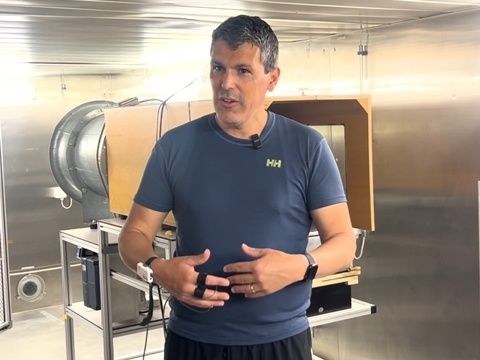
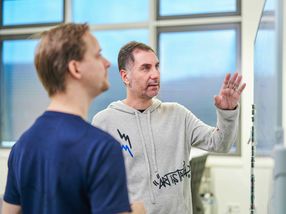
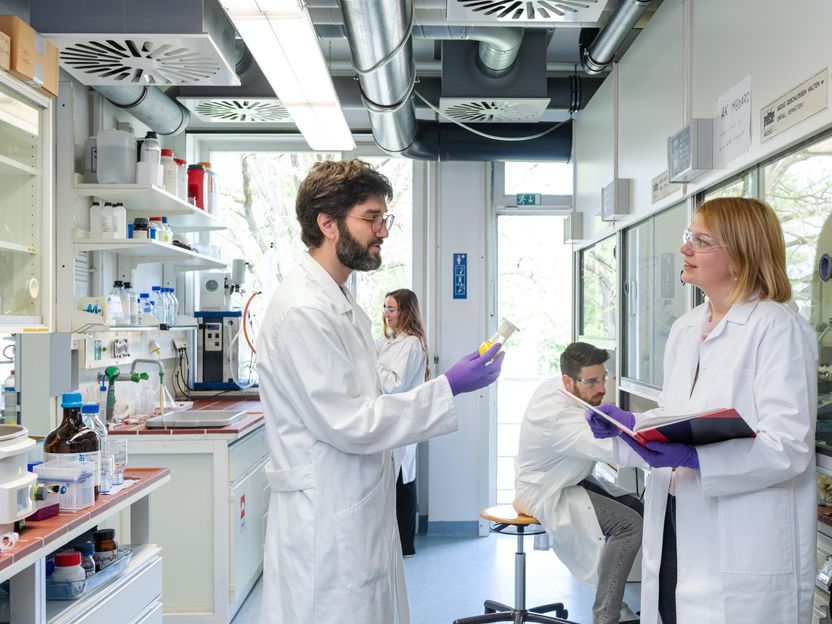
Empa researcher Simon Annaheim from Empa's Biomimetic Membranes and Textiles laboratory in St. Gallen evaluates sensor prototypes in the climate chamber.
Videostill ETH Zürich – Institute für Translationale Medizin
Ageing is a lifelong process that affects us all. And yet it is still a poorly understood biological phenomenon. It is clear that fitness and susceptibility to certain diseases change over the course of a lifetime and that medical treatments must be adapted to the body's actual condition. But how old is a person really? As old as they feel? Or as old as it says on the ID?
As chronological age, measured in years of lifetime, only tells us a limited amount about a person's physical condition, research has long been trying to determine a person's actual biological age. For example, various blood parameters, so-called molecular biomarkers, which have to be analyzed in the laboratory, are an – albeit complex – method of determining our biological age.
A research team led by Noé Brasier (ETH Zurich) with the participation of Empa, Caltech (California Institute of Technology) and the University Hospital Basel is now working on a simpler yet precise measurement method for new biomarkers in sweat in order to track down biological age and thus better understand the process of ageing, longevity and resilience.
An age clock for customized therapies
Empa researcher Simon Annaheim from Empa's Biomimetic Membranes and Textiles laboratory in St. Gallen evaluates sensor prototypes in the climate chamber. Image: Videostill ETH Zurich – Institute of Translational Medicine
The recently launched project AGE clock for RESIlience in SweaT, or AGE RESIST for short, funded by the Swiss National Science Foundation (SNSF), brings together researchers from the clinical, medical research and sensor technology sectors to develop a convenient portable sensor for sweat analysis. New molecular biomarkers in sweat are measured and combined with other physiological parameters. “Thanks to the high precision of the sensors on the skin, we continuously obtain reliable data on the physiological state of the body,” says Simon Annaheim from Empa's Biomimetic Membranes and Textiles laboratory in St. Gallen.
Such an age clock could therefore provide important information about a person's physical resilience and resistance to stress. In this way, the age clock also helps to adapt medical treatments in a personalized – and therefore more effective – way to the respective condition of patients. Side effects and risks could thus be reduced, and therapies could be used in a more targeted and effective manner.
Other news from the department science







These products might interest you


Most read news



More news from our other portals













Last viewed contents
Fair Rules for Sharing Sequence Data: New roadmap in Nature Microbiology - Combining openness and fairness in the data-intensive life sciences
How DNA can be decoded more easily - New Software Simplifies Analysis of “Jumping Genes”
Shining some light on the obscure proteome - Chemoproteomics draw the target landscape of HDAC drugs
Unchartered territory in the human genome
Comparison of two nano rulers - Study compares two methods for distance measurement in motile proteins

Imaging the dynamic cellular zoo made easier - This work will expand the ability to simultaneously monitor many processes in cells

How artificial intelligence can improve protein detection - Using AI to move the boundaries of microscopy
Novel AI-based software enables quick and reliable imaging of proteins in cells - Researchers programmed a tool that accurately recognises and picks proteins in electron cryo-tomography, substituting troublesome hand selection

Waters and Sartorius Expand Collaboration to Deliver Comprehensive Bioanalytics for Downstream Biomanufacturing
Researchers show that introduced tardigrade proteins can slow metabolism in human cells
New technique expands tissues so hundreds of biomolecules can be seen inside cells