From beer to useful fats and medicines
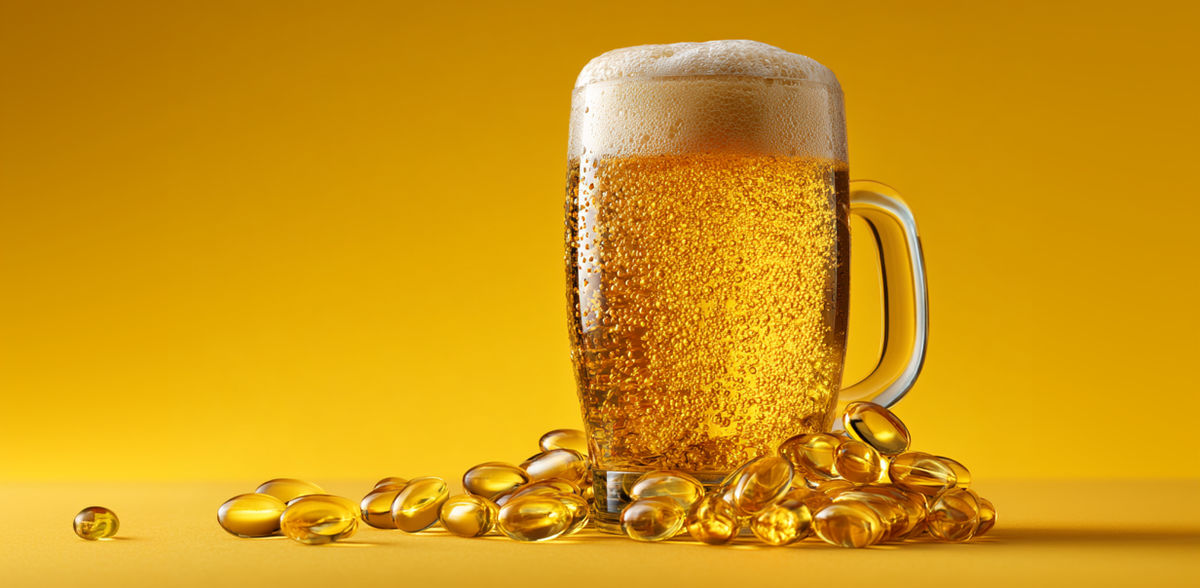
The spent grain from beer brewing can be used to make microcapsules that can preserve omega-3 oils and medicines
Advertisement


The residues that remain when a brewery makes beer or whiskey are called spent grain or brewer’s spent grain (BSG). Spent grain is available in large quantities, and is full of proteins and amino acids that should be possible to use. In practice, however, spent grain is mostly used as an additive in animal feed, unless it is simply thrown away.
Now, a PhD research fellow at the Department of Biotechnology and Food Science at NTNU has found a way to use spent grain. “This is a valuable source of protein with excellent properties. More people are therefore interested in using spent grain as an alternative to animal protein,” said Toktam Farjami, who is taking her PhD in food science at NTNU. Farjami has looked at different possibilities for the industry to use the raw material.
Suitable for making capsules
“The proteins in spent grain are water-repellent. At the same time, they act as emulsifiers, and help mix substances that don’t necessarily want to mix. The proteins can also be used to create a protective film,” she said. This makes spent grain a good candidate for a very special task.
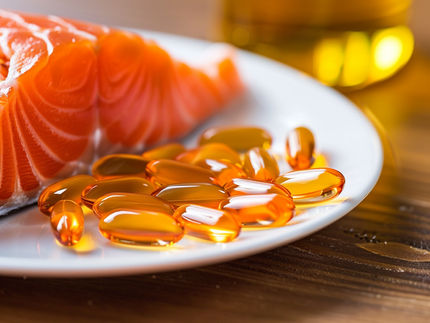
“The proteins in spent grain are promising for making the walls of microcapsules for fish oil and other food products that contain healthy omega-3 fatty acids,” says Farjami.
Experimenting at the molecular level
It’s not just making the microcapsules, however. These microcapsules must be stable over a long period. “To prevent oxidation and preserve the health effects of fish oil, it is crucial that we make effective and durable capsules,” she said.
Hers is the first study to look at the possibilities of using the proteins in spent grain for exactly this purpose. She and her colleagues have studied the proteins at the molecular level to understand them in a detailed way.
They made protein concentrates from spent grain using an alkaline extraction method. At the same time, they investigated the effect of different precipitating agents and gentle heating on composition, encapsulation and several other aspects of the concentrates.
Can increase the value of spent grain
“We found that our protein concentrates had excellent properties for making microcapsules,” Farjami said.
These properties were improved when they replaced hydrochloric acid with citric acid in the extraction process of the proteins, and at the same time adjusted the acidity.
“We see that the microcapsules can preserve fish oil so that it is as fine as fresh oil even, after storing the microcapsules for 15 days at 40 degrees,” she said.
Microcapsules like this can also be used to store medicines. The cosmetics industry can also benefit from them.
These promising results suggest that spent grain can become a valuable product that reduces food waste, contributes to a healthier diet and many other useful things.That’s a far better alternative than throwing it away.
Need to make better use of resources
“In the future, we must make far better use of our resources than we do today. This requires not only technological research, but also insight into raw materials, market potential and consumer behaviour. That’s why research like this is so important,” said Professor Eva Falch, who is Farjami’s supervisor.
Falch says that many byproducts food production aren't currently used, both in the seafood industry and in the beverage sector. She says it's crucial that society develop methods to use every bit of the raw material used in food production. Toktam's research shows how residual streams can have new value in a circular bioeconomy.
"The exciting thing here is how a residual stream from one industry – the brewing industry – can become a functional ingredient in another. These are the kinds of interdisciplinary innovations we need to build the sustainable food systems of the future," Falch said.
Original publication
Other news from the department science











Most read news



More news from our other portals

















Last viewed contents

AI models for drug design fail in physics

Targeted protein degradation: Researchers find new way to combat harmful proteins in tumour cells - Domino effect in the fight against cancer
Chemistry meets biology: controlling artificial cell membranes through catalysis - Researchers develop an artificial metalloenzyme-based platform that enables programmable control of artificial membrane behavior

QIAGEN to acquire Parse Biosciences - Entering the age of single-cell AI

Setting the Course for AI-Assisted Radiology - Fraunhofer MEVIS and Radboud University Medical Center have founded the spin-off Plain Medical

Ancient viral DNA shapes modern human placentas - “It’s a reminder that there is much more to learn about our genome and how ancient infections can influence who we are today”

Analytica 2026: AI as a driver of digital transformation - Laboratory of the future in action
How the principle of cheese noodles helps against Alzheimer's

New deep-learning tool can tell if your salmon is wild or farmed

Bayer confirms 2025 Group outlook, progresses on strategic priorities - "Our organization continues to get leaner and more efficient, and we’re seeing benefits in terms of speed and focus"

Q3 2025: Merck Shows Solid Organic Growth Across All Sectors - Strong performance by Process Solutions, Rare Diseases and Semiconductor Solutions