Novel Technique Improves Brain-State Detection
New method boosts precision of a non-invasive brain-state classification with functional near-infrared spectroscopy (fNIRS)
Advertisement


Researchers have developed a new method that greatly improves the accuracy of brain-state classification with functional near-infrared spectroscopy (fNIRS). The brain-imaging technique fNIRS allows researchers to measure neural activity: Active brain cells need more oxygen, so variations in blood flow and oxygen saturation indicate which brain regions are at work. fNIRS detects these changes safely and without invasive procedures. Despite its many advantages in clinical settings – it is portable, cost-effective, and reliable even if the patient moves –, the methods for analyzing fNIRS data are less advanced compared to other brain-imaging techniques.
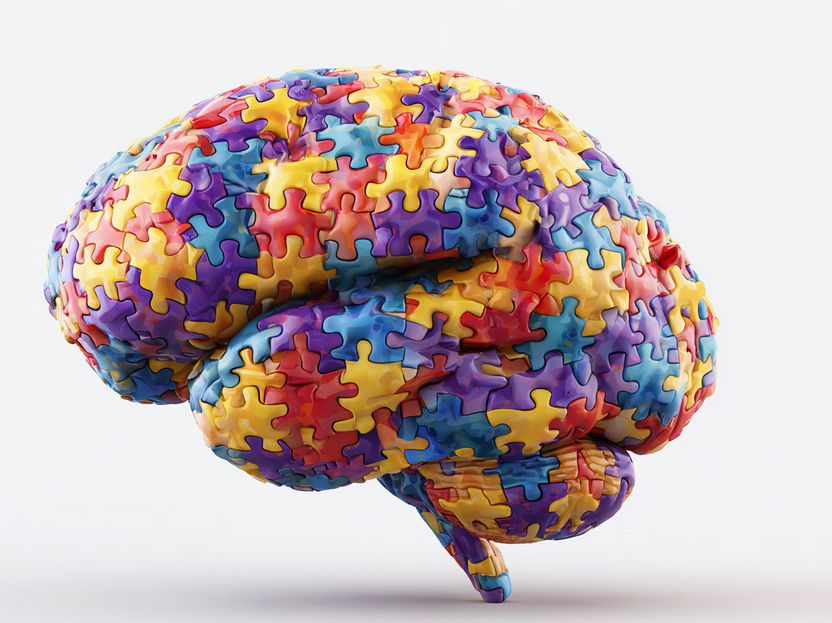
AI-generated image
Harnessing the dual nature of fNIRS signals
An international research team has now developed a method for classifying brain states with fNIRS which is specifically tailored to the unique properties of the fNIRS signal and achieves therefore more accurate results. In contrast to other brain imaging methods, fNIRS measures both the oxygenated and the deoxygenated blood. “These two signals naturally show opposite patterns, but that doesn’t mean they are redundant,” explains Tim Näher, first author of the study, who works at the Max Planck Institute for Biological Cybernetics in Tübingen, Germany. “Instead, they give us complementary insights into brain activity.”
Näher and his coauthors exploited this unique dual nature of the fNIRS signal by applying advanced mathematical tools from a field called Riemannian geometry. To test their new method, the team asked healthy participants to perform eight different mental tasks such as imagining playing tennis, internally singing, or rotating an object in their mind. With the new computational framework, the researchers were able to classify very accurately which of the tasks a participant was executing, significantly surpassing the precision of traditional methods.
New approach may help reveal signs of consciousness in patients
The results could play an important role in improving the diagnosis of disorders of consciousness. These conditions are notoriously difficult to assess: Patients often have little to no ability to move or communicate, making it challenging to determine whether they retain some level of wakefulness and awareness. However, an accurate diagnosis is essential for effective treatment and reliable prognosis.
This is why Näher collaborated with Lisa Bastian of the University of Tübingen on a second study, conducted at Bettina Sorger’s lab at Maastricht University, which developed a novel fNIRS paradigm to assess whether a non-responsive patient is still conscious. To this end, healthy participants were asked either to carry out a mental task—simulating a state of awareness—or to remain consistently inactive. The novel fNIRS paradigm combined with the new data-analysis approach based on Riemannian geometry proved remarkably accurate in distinguishing between responsive and unresponsive brain states: It correctly identified responsiveness every time and accurately recognized unresponsiveness in nine out of ten cases.
“So far, we provided a proof of concept that the new fNIRS framework can serve as a fast, objective, and accessible tool to support more reliable diagnoses and improve treatment decisions for disorders of consciousness,” Näher says. “The next logical step would be to test our method in real patients.”
Original publication
Tim Näher, Lisa Bastian, Anna Vorreuther, Pascal Fries, Rainer Goebel, Bettina Sorger; "Riemannian geometry boosts functional near-infrared spectroscopy-based brain-state classification accuracy"; Neurophotonics, Volume 12
Lisa Bastian, Tim Näher, Anna Vorreuther, Michael Lührs, Amaia Benitez Andonegui, Pascal Fries, Lars Riecke, Bettina Sorger; "Sensitive and specific fNIRS-based approach for awareness detection in disorders of consciousness: proof of principle in healthy adults"; Neurophotonics, Volume 12
Other news from the department science












Most read news



More news from our other portals
















See the theme worlds for related content
Topic World Spectroscopy
Investigation with spectroscopy gives us unique insights into the composition and structure of materials. From UV-Vis spectroscopy to infrared and Raman spectroscopy to fluorescence and atomic absorption spectroscopy, spectroscopy offers us a wide range of analytical techniques to precisely characterize substances. Immerse yourself in the fascinating world of spectroscopy!

Topic World Spectroscopy
Investigation with spectroscopy gives us unique insights into the composition and structure of materials. From UV-Vis spectroscopy to infrared and Raman spectroscopy to fluorescence and atomic absorption spectroscopy, spectroscopy offers us a wide range of analytical techniques to precisely characterize substances. Immerse yourself in the fascinating world of spectroscopy!
Last viewed contents
Bacteria ‘pills’ could detect gut diseases — without the endoscope - “This technology provides a new paradigm for rapid and non-invasive detection of gastrointestinal diseases”
When is genome sequencing advisable? - Human geneticists conduct clinical reference study for the diagnosis of genetic diseases

GenNext Technologies and Thermo Fisher Scientific Collaborate - Simplify Structural Biology for Faster Biotherapeutic Development
What the sea spider genome reveals about their bizarre anatomy - The first high-quality pycnogonid genome provides novel insights in chelicerate evo-devo
Analytica USA: Expert knowledge for research and practice - Special show Digital Transformation: a hands-on Smart Lab

Waters and BD's Biosciences & Diagnostic Solutions Business to Combine - Creating a Life Science and Diagnostics Leader Focused on Regulated, High-Volume Testing

Researchers identify a potential biomarker for long COVID - Extracellular vesicles in study participants contain SARS-CoV-2 peptides

Dana-Farber Cancer Institute unveils groundbreaking blood test for multiple myeloma

Promega and Watchmaker Genomics Announce Strategic Partnership - Partnership to Advance Molecular Analysis with Next-Generation Reverse Transcriptase
Analytica USA celebrated its premiere on the US market - Key topics: digitalization and sustainability in the laboratory
Determining our biological age with sensor technology - Sweat provides information about longevity and resilience