Pancreatic cancer forms "synapses"
Pancreatic tumors use neurotransmitters to drive their own growth: Researchers hope to identify drugs that can block this process
Advertisement


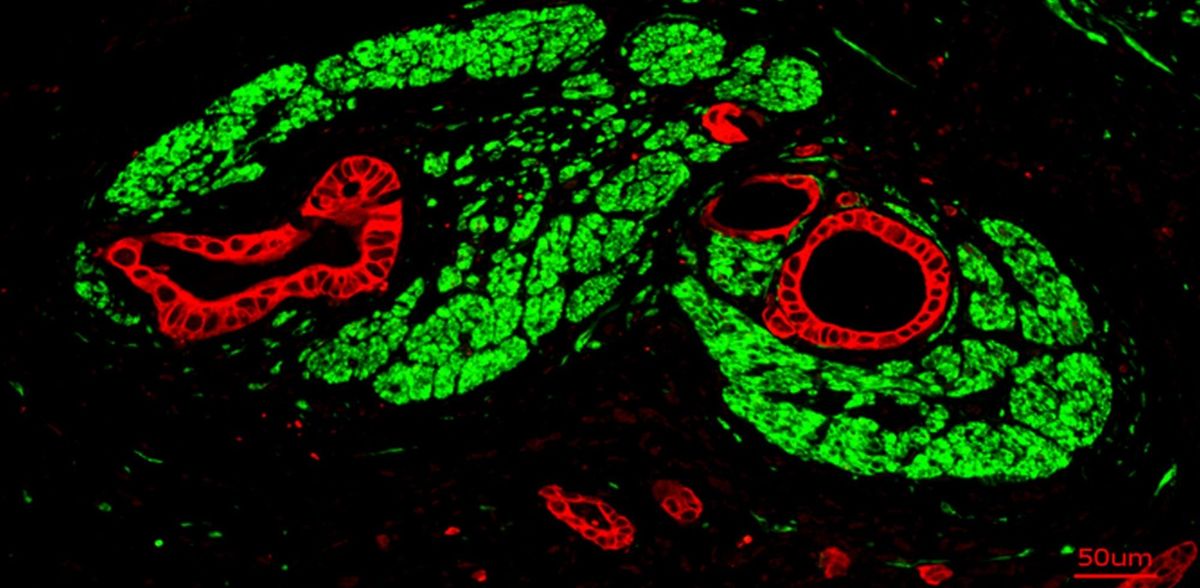
pancreatic cancer is one of the deadliest types of tumors. A team at the Technical University of Munich (TUM) has discovered that pancreatic tumors exploit the body’s nervous system by forming so-called pseudosynapses. Through a specific receptor, the cancer cells take up the neurotransmitter glutamate, which drives tumor growth. The researchers now hope to identify drugs that can block this process in patients.
It has been known for some time that the nervous system can affect cancer development. For example, nerve cells from healthy tissue can grow into tumors, a phenomenon known as “neural invasion,” which is typically linked to a poor prognosis.
About six years ago, a US research group discovered a new mechanism in the brain: tumors can form their own synapses, co-opting neuronal communication for their benefit. Professor Ekin Demir, a clinician scientist at the Department of Surgery at the TUM University Hospital, and his team built on this finding to investigate whether tumors outside the brain might form similar structures.
Searching for "tumor synapses"
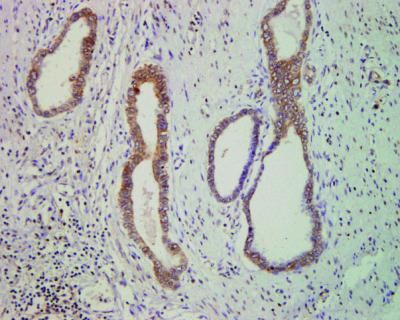
Pancreatic tumors often show neural invasion. Thus, if such synapse-like structures existed outside the brain, this was the most likely place to find them. The researchers searched pancreatic tumor tissue for clusters of receptors specialized for specific neurotransmitters. In some samples, they did indeed find a strong concentration of NMDA receptors – the receptors that bind glutamate. Then came the successful search for the characteristic structures of synapses, carried out in the classic way under the electron microscope Owing to subtle physiological differences compared with typical neuronal synapses, the researchers refer to these structures as pseudosynapses.
Calcium waves promote tumor growth
What advantage do pancreatic tumors gain by forming pseudosynapses? Like other glands, the pancreas is regulated by the nervous system. Depending on the body’s needs healthy pancreatic cells receive the neurotransmitter glutamate through their synapses. This triggers a series of processes. Pseudosynapses exploit this natural mechanism. “When glutamate binds to the cancer cells’ NMDA receptors, a channel opens and calcium flows into the cell,” explains Professor Demir. “This influx triggers molecular signaling cascades that drive tumor growth and metastasis.” The team observed that the cancer cells generate characteristic slow, long-lasting calcium waves that drive tumor growth in a sustained way.
Yet this remarkable mechanism may open up a path to new cancer therapies. In mouse experiments, the researchers successfully blocked the NMDA receptors on tumor cells with a drug. The result: pancreatic tumors grew more slowly, developed fewer metastases, and the animals lived longer.
“We are currently using bioinformatic methods to identify approved drugs that, in addition to their primary effects, can also block these specific NMDA receptors in pancreatic cancer cells,” says Professor Ekin Demir. “Therapies targeting the interface between the nervous system and tumors could open up entirely new treatment options.” The team suspects that other tumor types may also form pseudosynapses to accelerate their growth.
Original publication

Other news from the department science










Most read news



More news from our other portals














Last viewed contents

A toxin with a useful twist - Their work opens the door to new applications in lab-on-a-chip technologies, biosensors, and artificial cell prototypes
Gene scissors in camouflage mode help in the search for cancer therapies - Overlooked genes for metastasis formation uncovered
Gene modification enables more functional liver cells from stem cells
Bacteria Borrow Viruses to Spread Their Own Defences - Pseudomonas fluorescens exposed to sterile compost filtrate acquired multiple mobile genetic elements carrying anti-phage defence genes
Opening the door to affordable lab-grown beef, cow cells defy aging - A potential game-changer for creating sustainable, ethical meat without the environmental toll of traditional livestock farming

Synthesizing fine chemicals: Technological Advance in Production of Pharmaceuticals

Rentschler Biopharma announces largest single investment at its headquarters in Germany - Construction of a new buffer media station in Laupheim

Evotec announces sale of API manufacturing facility to Monacum Partners - New ownership committed to maintaining and growing the business

Ceva Animal Health invests in new 7,000 m² vaccine manufacturing facility to expand global production capacity

Daiichi Sankyo's investments in cancer drugs are taking shape - From Bavaria to the world: Daiichi Sankyo transfers technology for the development and production of antibody-drug conjugates to Germany
Waldner: Ground-breaking for new powder coating plant