Remdesivir disrupts COVID-19 virus better than other similar drugs
How the COVID-19 drug remdesivir works at the molecular level
Advertisement


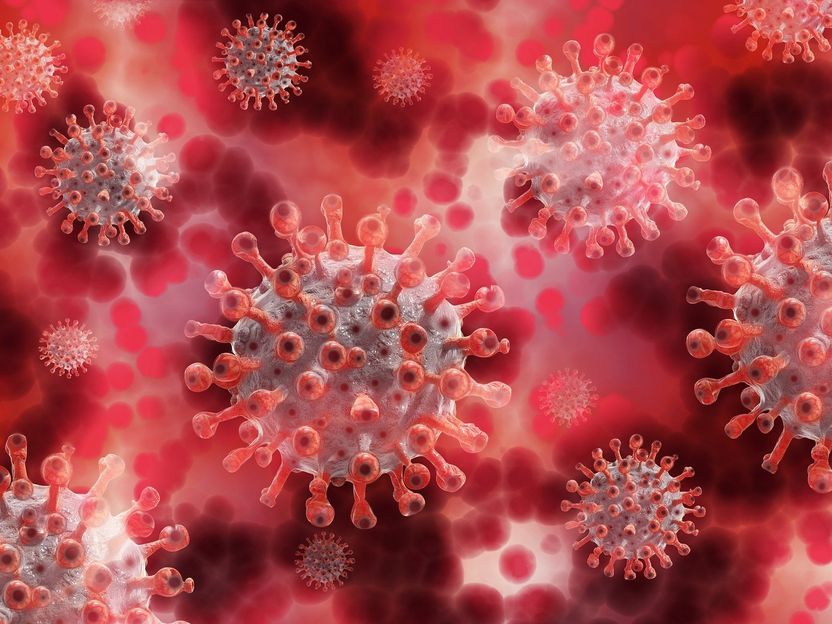
In the treatment of SARS-CoV-2, the virus that causes COVID-19, antiviral drug Remdesivir has emerged as a promising candidate.
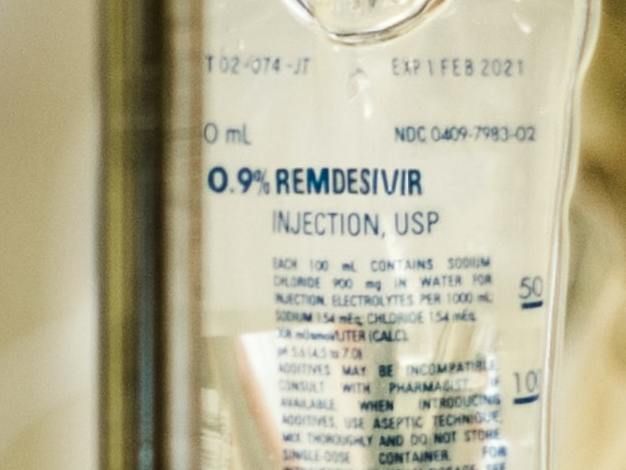
Photo by Dimitri Karastelev on Unsplash
Remdesivir works by disrupting the virus's ability to replicate, but its exact mechanism has remained a mystery. Using advanced computational simulations, researchers at the Pritzker School of Molecular Engineering (PME) at the University of Chicago have revealed just how the drug works at the molecular level. They also found that two drugs that work in a similar manner, ribavirin and favilavir, do not bind as effectively to the virus.
"It's important to understand how remdesivir works at a molecular level," said Prof. Juan de Pablo, who led the research. "Now that we see that it is effective, and other drugs are not as effective, it can guide future efforts for treating COVID-19."
The results were published Jan. 6 in the journal ACS Central Science.
Understanding how drugs disrupt the virus
Remdesivir works by disrupting SARS-CoV-2's RNA polymerase, a key enzyme that the virus needs to replicate itself. When this enzyme is disrupted, the virus cannot multiply and spread within the body.
But in patients, the drug has produced varied results. Some clinical trials have shown that patients who received it recovered faster and had improved mortality rates, while other trials have shown that the drug did not reduce mortality or hospitalization lengths.
Since the beginning of the pandemic, de Pablo and his group have been using advanced computational simulations to systematically look at the different proteins that allow the virus to replicate or infect cells. They also have looked at the key candidate drugs that are already used to treat other diseases and could be repurposed to inhibit those processes in SARS-CoV-2. The simulations, which require months of extremely powerful computations, ultimately reveal what happens at the molecular level.
To better understand how treatments disrupt the RNA polymerase, de Pablo and his group simulated the interaction between the enzyme and three drugs that are already available, and that are meant to inhibit it: remdesivir, ribavirin, and favilavir. They found that remdesivir binds strongly to the virus, but ribavirin and favilavir do not bind as effectively. They also found that remdesivir destabilizes the virus's protein complex, also reducing its ability to replicate.
Now that simulations show that the drug should work at a molecular level, scientists could focus, for example, on finding better strategies to deliver the drug more effectively, de Pablo said.
A complete landscape of molecular targets
Previously, the group used computational analysis to reveal how the drug Ebselen binds to the virus' main protease, or MPro. Now, the group is also examining the mechanisms of a different set of drugs on different proteins, with the goal of creating a complete landscape of molecular targets.
"We've seen that the virus is not going away and is in fact starting to mutate," de Pablo said. "Efforts to find the best therapies, and the best ways to administer them, have to continue."
Other news from the department business & finance


















Most read news



More news from our other portals

















Last viewed contents
Scientists identify 160 new drugs that could be repurposed against COVID-19 - Forty of these drugs have already entered clinical trials

Transparency for clinical trials - Transparency of study results in a public dashboard

Bertelsmann Investments acquires stake in AI-powered Israeli healthcare startup QuantHealth - AI-supported start-up company for clinical trial planning
First synthesis of open-chain N-stereogenic amines achieved - Study enables enantiomerically pure products for drug development.

The spider with the bee venom - New perspectives for the search for active substances against cell-based diseases - Researchers decode the toxin arsenal of the most poisonous native spider species

Is the immune system younger in the morning? - The internal clock of immune cells
Pancreatic cancer forms "synapses" - Pancreatic tumors use neurotransmitters to drive their own growth: Researchers hope to identify drugs that can block this process

A toxin with a useful twist - Their work opens the door to new applications in lab-on-a-chip technologies, biosensors, and artificial cell prototypes
Gene scissors in camouflage mode help in the search for cancer therapies - Overlooked genes for metastasis formation uncovered
Gene modification enables more functional liver cells from stem cells
Bacteria Borrow Viruses to Spread Their Own Defences - Pseudomonas fluorescens exposed to sterile compost filtrate acquired multiple mobile genetic elements carrying anti-phage defence genes