The spider with the bee venom - New perspectives for the search for active substances against cell-based diseases
Researchers decode the toxin arsenal of the most poisonous native spider species
Advertisement


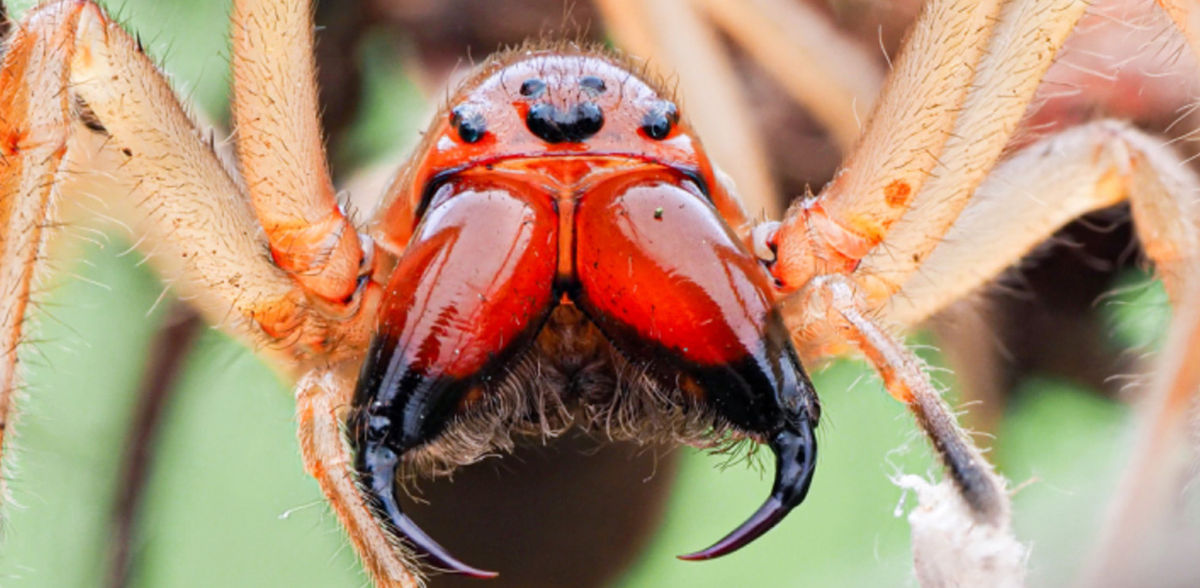
The nurse spider is the most poisonous spider in Germany. Its bite can lead to symptoms that require medical treatment. Despite this, the venom cocktail of this spider was virtually unknown until now. Researchers at Justus Liebig University Giessen (JLU) and the Fraunhofer Institute for Molecular Biology and Applied Ecology (IME) have now been able to decode the venom of the Nurse Thornfinger for the first time, gaining important insights into the evolution and pharmacology of its toxins. The work has been published in the journal "Communications Biology".
Spiders are venomous animals and feared by many people. However, the bites of most species, especially in Germany, are completely harmless to humans and often even asymptomatic. An exception to this is the nurse spider (Cheiracanthium punctorium), whose bite causes symptoms that are extremely unusual for spiders: severe pain, swelling and sometimes even circulatory problems, which can lead to medical emergencies in children and people with previous illnesses. Researchers from JLU and IME have now decoded the potent venom of this spider using modern systems biology methods.
"We have identified a whole catalog of new, exciting toxins and were able to show how the nurse spider can cause such painful poisoning," says Dr. Tim Lüddecke, head of the "Animal Venomics" working group at JLU's Institute of Insect Biotechnology and first author of the study. The venom of the nurse thorn finger contains many components that attack cell structures - similar to bee venom - and thus cause the strong local effects. "A type of toxin called CPTX and the enzyme phospholipase A2 are primarily responsible for this," says Lüddecke.
Through extensive comparative analyses of toxins from the entire spider kingdom and by means of evolutionary reconstructions, the researchers were able to deduce that both toxins have undergone a complex evolutionary history. While the toxin family of CPTX and its relatives emerged early in the evolution of modern spiders and acquired their characteristic structure through gene fusion, significant amounts of phospholipase A2 are only found in the nurse spider finger.
Defensive venoms are characterized by a rapid onset of severe pain, which enables rapid defence against enemies. Phospholipase A2 is found in many animals that use their venom defensively, especially insects. The researchers studied its structure and found that the phospholipases in the nurse thorn finger are similar to those in bee venom. They suspect that the pharmacological and structural similarity between the venom of the nurse thorn finger and bee venom is due to their comparable biological function. "In contrast to other spiders, the nurse spider uses its venom primarily to defend its brood," explains Lüddecke. "Bees and some other species also have classic defensive venoms. Apparently, evolution reacts with similar biomolecular solutions to comparable problems, although the respective species are not closely related."
This opens up new perspectives for the search for active substances. For example, spider venom has so far been considered almost exclusively in the search for new lead structures for the treatment of neuronal diseases. "However, the range of toxins in nurse spider venom that attack cells indicates that they should also be evaluated for active substances against cell-based diseases such as cancer in the future," says Lüddecke.
Note: This article has been translated using a computer system without human intervention. LUMITOS offers these automatic translations to present a wider range of current news. Since this article has been translated with automatic translation, it is possible that it contains errors in vocabulary, syntax or grammar. The original article in German can be found here.
Original publication

Other news from the department science















Most read news




More news from our other portals


















Last viewed contents

Is the immune system younger in the morning? - The internal clock of immune cells
Pancreatic cancer forms "synapses" - Pancreatic tumors use neurotransmitters to drive their own growth: Researchers hope to identify drugs that can block this process

A toxin with a useful twist - Their work opens the door to new applications in lab-on-a-chip technologies, biosensors, and artificial cell prototypes
Gene scissors in camouflage mode help in the search for cancer therapies - Overlooked genes for metastasis formation uncovered
Gene modification enables more functional liver cells from stem cells
Bacteria Borrow Viruses to Spread Their Own Defences - Pseudomonas fluorescens exposed to sterile compost filtrate acquired multiple mobile genetic elements carrying anti-phage defence genes

Opening the door to affordable lab-grown beef, cow cells defy aging - A potential game-changer for creating sustainable, ethical meat without the environmental toll of traditional livestock farming

Synthesizing fine chemicals: Technological Advance in Production of Pharmaceuticals

Rentschler Biopharma announces largest single investment at its headquarters in Germany - Construction of a new buffer media station in Laupheim

Evotec announces sale of API manufacturing facility to Monacum Partners - New ownership committed to maintaining and growing the business

Ceva Animal Health invests in new 7,000 m² vaccine manufacturing facility to expand global production capacity